
You probably know what housekeeping and janitorial services entail, but you might not be as familiar with environmental services (EVS). This is a group of highly trained support staff who serve as a healthcare facility’s frontline defense in infection prevention and control.
EVS in healthcare teams help improve safety, maintain regulatory compliance, and protect public health through infection control and decontamination. Their efforts directly impact patient outcomes and prevent healthcare-associated infections (HAIs), which cost hospitals billions each year.
Understanding the role of EVS is essential for healthcare leadership, as it explains why leveraging this service can set their organization up for optimal performance and sustainable success.
What Does EVS Stand for in Healthcare?
Environmental services is the specialized hospital support services department responsible for maintaining clean, sanitary, safe, and compliant care environments throughout a healthcare facility. These teams are typically responsible for:
- Cleaning and disinfecting patient care and public areas
- Supporting infection prevention efforts
- Linen management
- Maintaining environmental hygiene standards
- Contributing to regulatory compliance and survey readiness
- Ensuring safe conditions throughout the facility
Every environment and surface in a hospital affects patient safety. EVS professionals ensure that these spaces meet stringent healthcare standards while supporting the organization's clinical mission.
EVS vs. Traditional Housekeeping: An Important Distinction
Some use housekeeping and environmental services interchangeably. However, while there are similarities, healthcare EVS operates on an entirely different level of complexity and accountability.
Traditional housekeeping focuses primarily on appearance and cleanliness. Healthcare EVS also prioritizes infection prevention, contamination reduction, and patient safety.
An EVS professional must understand:
- Proper disinfectant selection and application
- Required disinfectant contact times
- Isolation room protocols
- Bloodborne pathogen precautions
- Regulatory requirements
- High-touch surface management
- Cross-contamination prevention strategies
EVS staff clean, disinfect, decontaminate, document, audit, and contribute directly to clinical outcomes.
Their work is guided by infection prevention and control teams and supported with evidence-based protocols that reduce the spread of dangerous pathogens.
EVS and Infection Prevention and Control: A Critical Partnership
Healthcare-associated infections are among the most significant patient safety challenges facing hospitals today. Approximately one in 31 hospital patients has at least one HAI on any given day. These infections contribute to extended lengths of stay, increased treatment costs, and avoidable mortality.
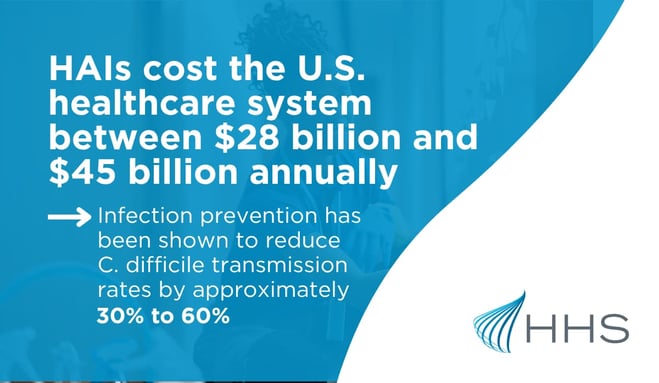
The financial burden is equally significant. Research has estimated that HAIs cost the U.S. healthcare system between $28 billion and $45 billion annually through additional treatment, extended hospitalizations, and related complications.
While hand hygiene, antimicrobial stewardship, and clinical protocols all play essential roles, the healthcare environment itself can serve as a reservoir for pathogens.
High-touch surfaces such as bed rails, call buttons, and door handles can become contaminated and contribute to transmission when not properly disinfected.
Environmental services teams help break the chain of infection by systematically removing and eliminating pathogens from the care environment. Their work complements the efforts of infection preventionists, nursing teams, physicians, and other clinical staff.
High-performing EVS departments work closely with infection prevention leaders to identify risks, respond to outbreaks, monitor cleaning effectiveness, and continuously improve environmental hygiene practices.
How EVS Protocols Reduce Healthcare-Acquired Infections (HAIs)
Reducing healthcare-acquired infections requires more than routine cleaning. Effective EVS programs use evidence-based protocols that target areas most likely to contribute to pathogen transmission, including:
Terminal Cleaning of Patient Rooms
When a patient is discharged, EVS teams perform a comprehensive cleaning and disinfection process before the next patient occupies the room. Special attention is given to high-touch surfaces and equipment.
Enhanced Cleaning for Isolation Rooms
Patients under contact precautions require additional environmental controls and cleaning procedures to prevent transmission of pathogens such as MRSA, VRE, and C. difficile.
High-Touch Surface Disinfection
Frequently touched surfaces significantly contribute to the spread of germs. The best EVS programs prioritize these areas through standardized cleaning protocols and auditing processes.
In fact, infection prevention has been shown to reduce C. difficile transmission rates by approximately 30% to 60%.
Advanced Disinfection Technologies
Many healthcare organizations now supplement manual cleaning with ultraviolet (UV-C) disinfection systems and other no-touch technologies. These tools can help reduce residual environmental contamination after traditional cleaning is complete.
Verification and Auditing
Modern EVS programs also use fluorescent markers, ATP testing, and other objective measurement tools to verify cleaning effectiveness and identify opportunities for improvement.
The Joint Commission, CMS, and What Surveyors Actually Look For
EVS also plays a vital role in regulatory compliance.
Healthcare organizations are expected to maintain safe environments that support patient care, staff safety, and operational effectiveness. Environmental conditions are routinely evaluated during accreditation surveys and regulatory inspections.
The Joint Commission's Environment of Care standards address the management of the physical environment in which healthcare is delivered. Environmental cleanliness, sanitation practices, documentation, staff training, and infection prevention activities all contribute to survey readiness.
Administrators may also encounter questions regarding the seven areas of the environment of care, which include:
- Safety
- Security
- Hazardous materials and waste
- Fire prevention
- Medical equipment
- Utilities management
- Emergency management
EVS directly influences several of these domains, particularly safety, hazardous waste management, infection prevention, and emergency preparedness.
CMS also evaluates healthcare quality through programs that influence reimbursement and public reporting. Healthcare-associated infections and patient experience measures can affect performance metrics tied to value-based purchasing initiatives.
The Strategic Case for Professional EVS Management
Many organizations once viewed environmental services primarily as a cost center.
Thankfully, that perspective is changing.
Today's healthcare leaders increasingly recognize that EVS performance affects some of the most important metrics in healthcare operations:
- Patient safety
- Infection rates
- Regulatory compliance
- Patient satisfaction
- Reimbursement
- Organizational reputation
Underinvesting in EVS can create substantial downstream costs. By contrast, high-performing EVS programs create value across the organization.
They establish standardized processes, leverage data to drive improvement, maintain strong training programs, and align environmental hygiene practices with a facility’s long-term goals.
The difference between a merely compliant EVS program and an exceptional one comes down to leadership, accountability, and operational discipline.
EVS and Patient Outcomes: What the Data Shows
Patients notice cleanliness. CMS even includes "Cleanliness of Hospital Environment" as a publicly reported patient experience measure within the HCAHPS program. HCAHPS scores also contribute to purchasing initiatives that can influence hospital reimbursement.
For patients and families, environmental cleanliness serves as a visible indicator of a facility’s quality and safety.
A clean environment can improve confidence in care, strengthen trust in the organization, and positively influence the patient experience.
Additionally, environmental hygiene supports patient outcomes by reducing opportunities for pathogen transmission.
Organizations that prioritize EVS excellence often see benefits across multiple performance areas, including:
- Reduced infection risk
- Improved patient satisfaction
- Enhanced survey readiness
- Stronger quality performance metrics
- Better organizational reputation
These outcomes make EVS an essential operational and strategic priority.
Operational Excellence in EVS: Staffing, Training, and Accountability
Strong EVS performance requires a structured operating model built around people, processes, and accountability. High-performing EVS programs emphasize:
Comprehensive Onboarding and Training
Staff must understand infection prevention principles, cleaning protocols, chemical safety, and regulatory expectations.
Competency Validation
Initial training alone is insufficient. Ongoing competency assessments help ensure procedures are performed correctly and consistently.
Quality Assurance Programs
Routine inspections, audits, and performance monitoring help reveal opportunities for improvement.
Data-Driven Management
Leading organizations use measurable performance indicators to monitor outcomes and drive continuous improvement.
Strong Leadership
Effective EVS leaders coordinate staffing, manage resources, collaborate with clinical departments, and champion environmental quality throughout the organization.
These elements transform EVS from a reactive cleaning operation into a proactive patient safety function.
What to Look for in an EVS Partner or Program
Healthcare leaders evaluating their environmental services operations should ask several questions to determine whether a program is positioned for success, including:
- How are cleaning outcomes measured and verified?
- What infection prevention training do team members receive?
- How are competencies validated over time?
- What quality assurance processes are in place?
- How does EVS collaborate with infection prevention teams?
- What technologies are being used to improve performance?
- How are staffing levels determined and monitored?
- What metrics are used to evaluate success?
Whether services are managed internally or through an external partner, leadership should expect accountability, transparency, measurable outcomes, and continuous improvement.
Elevating EVS in Healthcare
Environmental services professionals help reduce infection risks, support regulatory compliance, and improve patient experiences. Their work touches nearly every aspect of healthcare operations, making EVS one of the most important yet often underappreciated functions within a healthcare facility.
As healthcare organizations continue to focus on quality, safety, and value-based care, the importance of environmental services will only continue to grow.
The hospitals that recognize EVS as a strategic investment will be better positioned to protect patients, support caregivers, and achieve stronger outcomes across the board.
