
HHS is Advancing Safe Dining Through Collaboration, Compassion, and IDDSI Standards.
Did you know swallowing difficulties, known as dysphagia, can affect individuals of all ages? Dysphagia may present as coughing or choking during meals, difficulty controlling saliva, changes in voice quality after eating or drinking, or the sensation of food “getting stuck.” While these symptoms may seem minor, dysphagia can lead to serious health complications, including aspiration, pneumonia, malnutrition, dehydration, and reduced quality of life.
During National Dysphagia Awareness Month this June, HHS Culinary & Nutrition Services is proud to recognize the importance of safe dining practices, interdisciplinary collaboration, and evidence-based nutrition care across both acute care hospitals and senior living communities.
At HHS, our culinary teams, Registered Dietitians (RDs), and Registered Dietetic Technicians (DTRs) work closely alongside Speech-Language Pathologists (SLPs) to support individuals with swallowing difficulties. This collaboration is essential in creating individualized care plans that prioritize both nutritional health and safe meal intake.
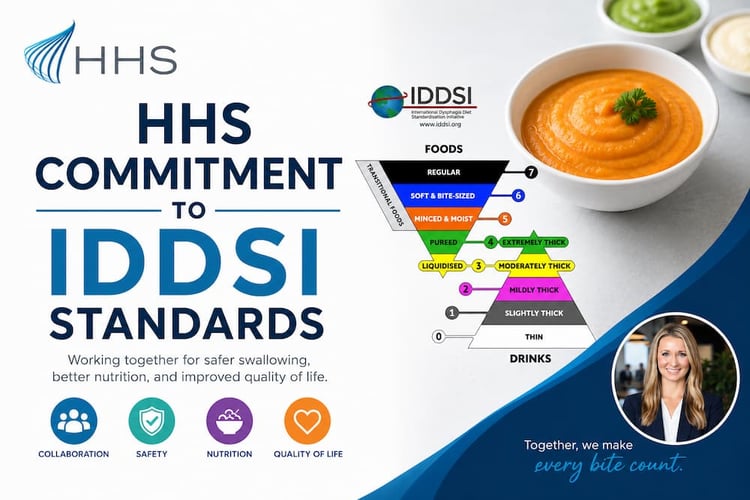
HHS Commitment to IDDSI Standards
HHS has adopted the International Dysphagia Diet Standardisation Initiative (IDDSI) framework as our primary texture modification standard across acute care and senior living operations.
IDDSI was developed to provide a globally standardized approach to texture-modified foods and thickened liquids to reduce the risk of choking and aspiration. By replacing inconsistent terminology with a universal, color-coded framework, IDDSI helps ensure that patients, caregivers, clinicians, and foodservice teams speak the same language when it comes to dysphagia management.
Why is IDDSI Important?
Safety First
Dysphagia can lead to life-threatening complications if foods and liquids are not prepared appropriately. Standardized texture levels help reduce variability and support safer swallowing practices for patients and residents.
Consistency Across Care Teams
IDDSI provides a common language among healthcare professionals, including Speech-Language Pathologists, Dietitians, Nursing teams, and Culinary Services. This consistency improves communication and helps ensure individuals receive the correct diet texture every time.
Enhanced Dining Experience
Texture-modified diets should still be enjoyable, nourishing, and dignified. Through collaboration between culinary and clinical teams, HHS strives to provide meals that not only meet safety standards but also promote hydration, nutrition, comfort, and quality of life.
Evidence-Based Practice
As healthcare continues to evolve, adopting nationally and internationally recognized standards allows organizations to align with best practices and support continuous quality improvement in patient care.
The Role of Culinary & Clinical Collaboration
Managing dysphagia effectively requires a highly coordinated interdisciplinary approach. At HHS, culinary professionals and clinical nutrition teams work alongside SLPs to ensure that texture modifications are implemented accurately and consistently throughout the dining experience.
This includes:
- Appropriate food texture preparation
- Thickened liquid consistency management
- Patient and resident meal safety
- Ongoing staff education and competency training
- Monitoring nutritional adequacy and hydration
- Supporting dignity and patient-centered dining experiences
Our teams remain committed to ensuring that food is both safe and enjoyable — because every meal matters.
Learn More About IDDSI
For additional resources, testing methods, educational materials, and the full IDDSI framework, visit the official IDDSI website:
International Dysphagia Diet Standardisation Initiative (IDDSI)
Together, during National Dysphagia Awareness Month, we recognize the importance of awareness, collaboration, innovation, and compassionate care in supporting individuals living with dysphagia.
